Gerard Steen

Gerard Steen is Emeritus Professor of Language and Communication at the Department of Dutch Studies, University of Amsterdam (Prof. dr. G.J.(Gerard) Steen – Universiteit van Amsterdam). He previously held chairs at VU University Amsterdam, in Language and Communication, and in Cognition and Language Use. Before then he worked at the University of Tilburg and at Utrecht University. He obtained his PhD from VU University Amsterdam with a thesis on Metaphor in Literary Reception. Before fully zooming in on metaphor, Steen worked in the empirical study ofliterature, cognitive linguistics, cognitive poetics, cognitive stylistics, and discourse analysis. He was the founder of the Pragglejaz Group and of the Metaphor Lab Amsterdam, developing MIP and MIPVU as new tools forreliable metaphor identification in discourse. This work enabled the production of the VU Metaphor Corpus and led to the discovery of the paradox of metaphor and the formulation and elaboration of Deliberate Metaphor Theory, including a new method for metaphor analysis. For more details, see Metaphor in Action
Marlene Johansson Falck

Marlene Johansson Falck is Professor of English linguistics at Umeå University. Her main research interests are in the fields of language, spatial cognition, and metaphor. Her work focuses on metaphorical language and thought, metaphor identification, the usage patterns of English prepositions, and on applying Cognitive Linguistics to second language teaching and learning. She was part of the founding committee of the Swedish Association for Language and Cognition (now Scandinavian Association for Language and Cognition) and was a long-time member of the governing board. She is one of the founders of MetNet Scandinavia and associate editor of Metaphor and Symbol.
Dagmar Divjak
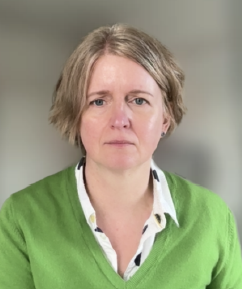 Dagmar Divjak holds a Chair in Cognitive Linguistics and LanguageCognition at the University of Birmingham. Focused on the relation between language and cognition, her work combines corpus linguistic techniques with behavioural and physiological experimental methods. She leads the interdisciplinary research group “Out of our Minds" which uses computational algorithms anchored in the psychology of learning to mimic how humans learn from data. This helps her develop new ways of describing language and language knowledge and transform how we learn and teach foreign languages. Author of more than a dozen books and edited volumes, including Frequency in Language (2019, CUP), she has served as Editor-in-Chief of Cognitive Linguistics (De Gruyter) and is an Ordinary Member ofthe Academia Europaea, Section Linguistics.
Barbara Lewandowska-Tomaszczyk
 Barbara Lewandowska-Tomaszczyk is Professor Dr habil. in Linguistics andEnglish Language at the Department of Language and Communication atthe University of Applied Sciences in Konin (Poland), formerly employed at the University of Lodz. Her research focuses on cognitive semantics and pragmatics of language contrasts, corpus linguistics and their applicationsin translation studies, lexicography and online discourse analysis. She is invited to read papers at international conferences and to lecture and conduct seminars at universities. She publishes extensively (over 300 publications), supervises dissertations and is also active organizing international conferences and workshops.
Jordan Zlatev
 Jordan Zlatev is Professor of General Linguistics and Director of Researchfor the Division for Cognitive Semiotics at Lund University, Sweden. He was the first president of the Swedish (currently: Scandinavian) Association for Language and Cognition (SALC), from 2006 to 2009, as well as of the International Association for Cognitive Semiotics (IACS), from 2013 to 2014, and the chair of two of its conferences held at Lund University, in 2014 and 2024. He is the author of Situated Embodiment: Studies in the Emergence of Spatial Meaning (1997), and of over 100 articles in academic journals and anthologies. He has co-edited The Shared Mind: Perspective on Intersubjectivity (2008), Moving Ourselves, Moving Others: Motion and Emotion in Intersubjectivity, Consciousness, and Language (2012), Meaning, Mind and Communication: Explorations in Cognitive Semiotics (2016), and Göran Sonesson’s posthumous book Semiotic Investigations: From Meaning to Pictures and Communication (2026). His current research focuses on polysemiotic communication, and more generally on the nature of language in relation to other semiotic systems like gesture and depiction. His approach to cognitive semiotics is strongly influenced by phenomenology, the philosophy and methodology of lived experience. He is editor-in-chief of Public Journal of Semiotics.